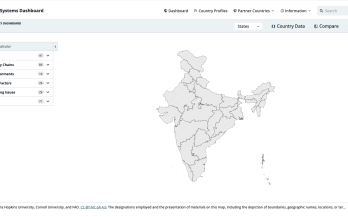
India’s food systems are as diverse as its geography and cultures, and what people grow, access, and consume varies considerably across the country. India has made significant progress in agricultural production and food security; India’s foodgrain production has reached a record high of 376.56 million tonnes in 2025-26, an increase of about 5.3% over the previous year.
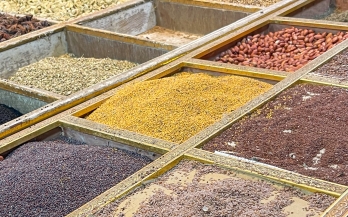
Under the RE-GAIN climate adaptation initiative led by AGRA, the Global Alliance for Improved Nutrition (GAIN) held an official launch for its work on transforming wholegrain value chains to reduce food loss and improve dietary quality, on 29 September 2026.
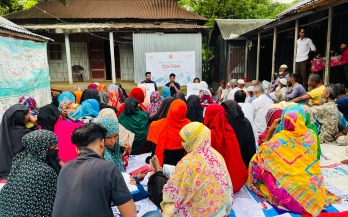
A nourished individual is indispensable for the prosperity of a country. Bangladesh has made significant progress toward tackling malnutrition, eradicating poverty, and reducing social vulnerability, yet major nutrition challenges persist. In 2023-2025, 8.2% of the population remained undernourished (SOFI 2026), nearly 38.6% could not afford a healthy diet (SOFI 2026), and 30.5% experienced moderate or severe food insecurity in 2021-2023 (SOFI 2023) amid climate shocks and economic pressures. Strengthening nutrition-sensitive social protection is therefore essential.
Food loss and waste (FLW) undermines the availability and affordability of nutritious foods, and accounts for 8–10% of global GHG emissions.1 Every tonne of food saved avoids emissions linked to production, transportation, and storage, as well as methane released during decomposition. FLW is about more than just increasing food system efficiency. When nutritious foods are lost or wasted before they reach consumers, the resources used to grow, process, transport, and sell that food are lost along with it. FLW also means fewer safe, affordable, and healthy food options available to communities, while farmers, fishers, traders, and other food system actors lose income.
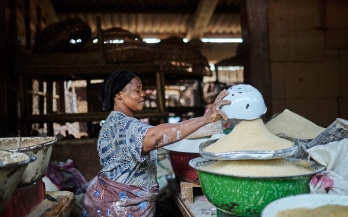
When you buy a pack of flour labelled "fortified", you should be able to trust that it contains the added micronutrients it promises. You take it home expecting it to contribute to the nutrition of the people who will eat it.
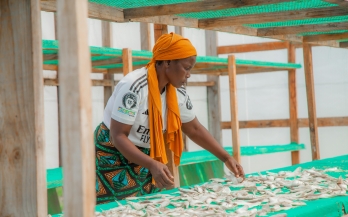
For years, sand and sudden rain could reduce the value of Isabel Alfândega’s dried fish. A solar drying tent now keeps her fish off the ground, shortens the drying process and helps her secure a better price.
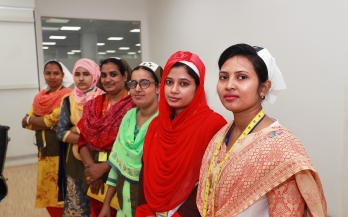
What does it take to create workplaces where women can truly thrive? Elizabeth Maddison reflects on GAIN’s gender commitments, progress in leadership and representation, and why sustained attention to systems, data and organisational practice remains critical as new challenges continue to shape women’s opportunities.
How does climate change affect not only how much food we produce, but also the nutritional quality of the food we consume?
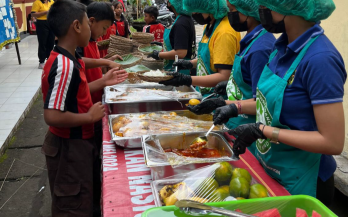
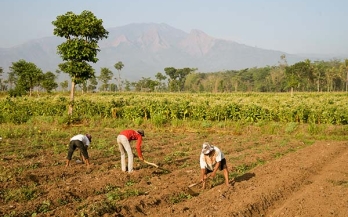
Climate change is already affecting Indonesia through rising temperatures, changing rainfall patterns, sea level rise, droughts, floods, and increasingly frequent hydrometeorological disasters.
At the Africa Food Systems Forum 2026 in Kigali, Dr Lawrence Haddad reflects on three priorities for accelerating food systems transformation: shifting demand towards healthier and more sustainable foods, turning strategies into investable action, and building partnerships strong enough to move both fast and far.
He also highlights why AFSF remains a uniquely valuable space for governments, businesses, investors and researchers to connect and drive practical change.
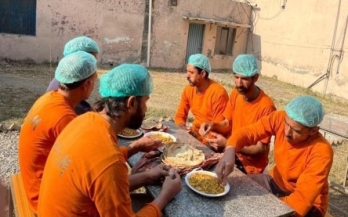
Embedding Workforce Nutrition into industrial settings can help workplaces move beyond simply providing meals towards creating healthier food environments.
Drawing on a collaborative pilot in Hattar Industrial Estate, Pakistan, this blog explores how nutrition education, employer engagement and locally produced healthier snacks can support employee wellbeing.